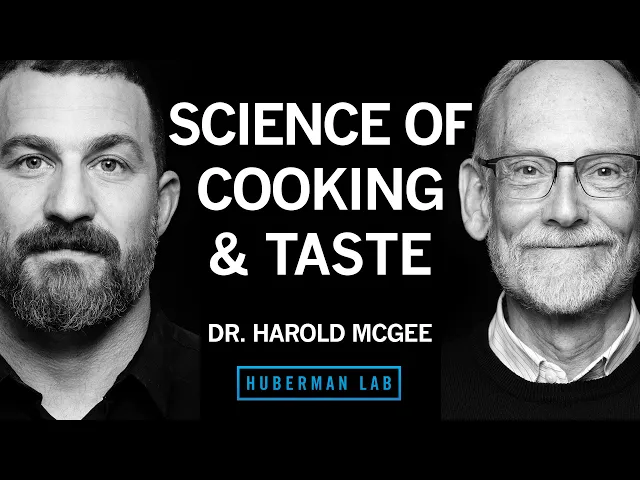
The Chemistry of Food & Taste | Dr. Harold McGee
Andrew Huberman
30 jun 2025
Mindsip insights from this episode:
Discover how cooking transforms flavors in unexpected ways
The heat from cooking can generate molecules that stimulate taste receptors like 'sweet' even from a food like meat, which doesn't initially contain them.
Whip egg whites in copper bowls for superior foam
Whipping egg whites in a copper bowl creates a superior foam with better color, texture, and consistency due to a chemical interaction.
Discover gut taste receptors for a whole-body flavor experience
In addition to the tongue, taste receptors are found throughout the digestive tract, which may explain why some flavors feel like a whole-body experience.

Chew slowly to enhance flavor experience
Chewing food slowly allows enzymes in your mouth to break down molecules and release new aromatic flavors over time, creating a more dynamic taste experience.
Train your palate to enjoy low-salt foods
You can train your taste preferences over a couple of months to enjoy foods with less salt, suggesting our perception of taste is highly malleable.
Brew coffee shorter to reduce bitterness
The longer you brew coffee, the more large, bitter, and astringent molecules you extract from the grounds.
Understand supertaster sensitivity to bitterness in food choices
People with a high density of taste buds, known as "supertasters," are often overly sensitive to bitterness, which can make them find many common foods aversive.
Add salt to bitter foods to enhance flavor
Adding a small amount of salt to bitter foods or drinks like coffee or grapefruit can counteract and diminish the sensation of bitterness.
Discover cheese crystals as crystallized amino acids in aged cheeses
The crunchy crystals found in aged cheeses like Parmesan are typically crystallized amino acids, such as tyrosine, that form as the cheese dehydrates over time.
Understand cilantro aversion linked to soapy taste perception
Cilantro contains molecules also found in soaps, so for people not acculturated to it, the taste can be perceived as soapy, explaining the strong aversion some have.
More from
Andrew Huberman

Optimizing Workspace for Productivity, Focus & Creativity | Huberman Lab Essentials
Best Ways to Build Better Habits & Break Bad Ones | James Clear
Essentials: Micronutrients for Health & Longevity | Dr. Rhonda Patrick
Defining Healthy Masculinity & How to Build It | Terry Real
Essentials: How to Optimize Your Hormones for Health & Vitality | Dr. Kyle Gillett
You also might be interested in

Dave Asprey: Animal Protein is Better, but Don’t eat THIS Animal Protein!

Sugar Controls Your Life – Here’s How to Break Free & Feel Incredible in 14 Days

Reversing The American Food Pyramid | Calley Means

Office Hours: What Happens to Your Body When You Stop Drinking for 30 Days

I Lost 100 Pounds By Fasting Like THIS (The Missing Step)