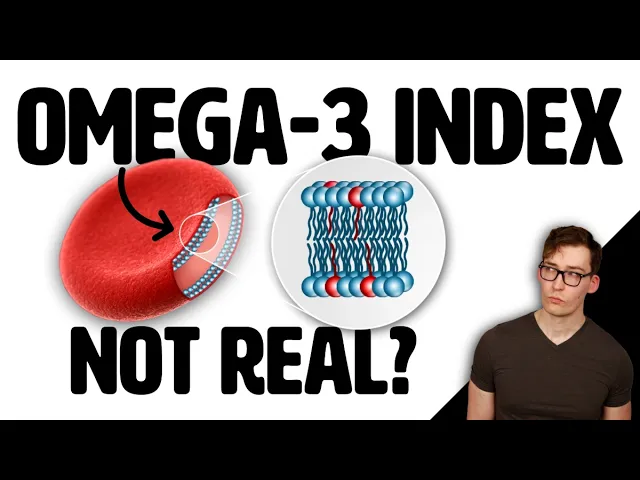
Omega-3 Deficiency: A Scam?

Physionic

20 nov 2025

Episode description

JOIN THE PHYSIONIC INSIDERS [PREMIUM CONTENT]Join the Physionic Insiders: https://bit.ly/PhysionicInsiders2 HEALTH AUTONOMY [COURSE]Learn to Analyze & Apply Studies for Yourself: https://bit.ly/healthautonomyJOIN THE COMMUNITYJoin my Community [It’s Free!]: https://bit.ly/PhysionicCommunity2EMAIL LIST1-2 Weekly Email of Value [It’s Free!]: http://bit.ly/2AXIzK6HIRE ME FOR CONSULTING: Consulting: https://bit.ly/3dmUl2H Created with BiorenderOmega-3 on the Brain (My Analysis): https://youtu.be/NScltXkIO44?si=YlRxFQecavSDwtaDOmega-3 on the Heart ( My Analysis): https://youtu.be/tX7xzzIhQgw?si=5ywm7xQRbfR3eFXSDr. Esselstyn and Reversing Heart Disease: https://youtu.be/DubbPEfdF5k?si=tEtYEhchM4ao2czgMr. Nelson's Video: https://youtu.be/s03aR2Z9GJs?si=S4uscacFdbf1ivpJ0:00 - Introduction2:20 - Dr. Fuhrman and the Vegan 'Scam'10:24 - Are Omega-3s even Effective?15:44 - Are People Deficient in Omega-3s? How?22:40 - Main Points/Key Take AwaysReferences[A] Sarter B, Kelsey KS, Schwartz TA, Harris WS. Blood docosahexaenoic acid and eicosapentaenoic acid in vegans: Associations with age and gender and effects of an algal-derived omega-3 fatty acid supplement. Clin Nutr. 2015;34(2):212-218. doi:10.1016/j.clnu.2014.03.003[B] Siscovick DS, Barringer TA, Fretts AM, et al. Omega-3 Polyunsaturated Fatty Acid (Fish Oil) Supplementation and the Prevention of Clinical Cardiovascular Disease: A Science Advisory From the American Heart Association. Circulation. 2017;135(15):e867-e884. doi:10.1161/CIR.0000000000000482[C] Harris WS, Von Schacky C. The Omega-3 Index: a new risk factor for death from coronary heart disease?. Prev Med. 2004;39(1):212-220. doi:10.1016/j.ypmed.2004.02.030[D] Siscovick DS, Raghunathan TE, King I, et al. Dietary intake and cell membrane levels of long-chain n-3 polyunsaturated fatty acids and the risk of primary cardiac arrest. JAMA. 1995;274(17):1363-1367. doi:10.1001/jama.1995.03530170043030[E] Albert CM, Campos H, Stampfer MJ, et al. Blood levels of long-chain n-3 fatty acids and the risk of sudden death. N Engl J Med. 2002;346(15):1113-1118. doi:10.1056/NEJMoa012918[F] Gonçalinho GHF, Sampaio GR, Soares-Freitas RAM, Damasceno NRT. Omega-3 Fatty Acids in Erythrocyte Membranes as Predictors of Lower Cardiovascular Risk in Adults without Previous Cardiovascular Events. Nutrients. 2021;13(6):1919. Published 2021 Jun 3. doi:10.3390/nu13061919[G] McNamara RK, Jandacek R, Rider T, Tso P, Dwivedi Y, Pandey GN. Selective deficits in erythrocyte docosahexaenoic acid composition in adult patients with bipolar disorder and major depressive disorder. J Affect Disord. 2010;126(1-2):303-311. doi:10.1016/j.jad.2010.03.015CRITIQUES, RULES, AND NOTESBe aware of the following rules before posting comments:- Please do not post summaries of the video in the comments - it damages retention on the video and YouTube is less likely to promote it (these videos cost me a lot of money to produce). Critiques of my work are welcome! Please be aware of the following notes & rules before submitting critique:Be mindful that this content is not all encompassing on the subject at hand and is self-limited for brevity to reach a wider audience. Also, be aware that I receive hundreds of YouTube comments per day, so the only way your critique can be considered is if you follow the steps outlined below. Finally, YouTube auto-deletes links, so I do not see most comments with links attached. RULES:If your comment is rude, you will be banned.If your comment is not about the studies/topics at hand (i.e. extending to other outcomes not discussed) or offers critique with no scientific basis, it is unlikely to receive a response.If you can follow these rules, I will try to address your critique and if there is merit, I will add an AMENDMENT to the content in question and pin it so everyone can see it (thank you!). Please use the following link to submit your critique: https://bit.ly/PhysionicCritiqueDisclaimer: None of the information provided by this brand is a replacement for your physician's advice. This brand is information for the sake of knowledge and the options of choice it provides, not in any way a personalized prescription. Please consult your physician before making any health related changes. #omega3 #fishoilbenefits #vegan

Episode description

JOIN THE PHYSIONIC INSIDERS [PREMIUM CONTENT]Join the Physionic Insiders: https://bit.ly/PhysionicInsiders2 HEALTH AUTONOMY [COURSE]Learn to Analyze & Apply Studies for Yourself: https://bit.ly/healthautonomyJOIN THE COMMUNITYJoin my Community [It’s Free!]: https://bit.ly/PhysionicCommunity2EMAIL LIST1-2 Weekly Email of Value [It’s Free!]: http://bit.ly/2AXIzK6HIRE ME FOR CONSULTING: Consulting: https://bit.ly/3dmUl2H Created with BiorenderOmega-3 on the Brain (My Analysis): https://youtu.be/NScltXkIO44?si=YlRxFQecavSDwtaDOmega-3 on the Heart ( My Analysis): https://youtu.be/tX7xzzIhQgw?si=5ywm7xQRbfR3eFXSDr. Esselstyn and Reversing Heart Disease: https://youtu.be/DubbPEfdF5k?si=tEtYEhchM4ao2czgMr. Nelson's Video: https://youtu.be/s03aR2Z9GJs?si=S4uscacFdbf1ivpJ0:00 - Introduction2:20 - Dr. Fuhrman and the Vegan 'Scam'10:24 - Are Omega-3s even Effective?15:44 - Are People Deficient in Omega-3s? How?22:40 - Main Points/Key Take AwaysReferences[A] Sarter B, Kelsey KS, Schwartz TA, Harris WS. Blood docosahexaenoic acid and eicosapentaenoic acid in vegans: Associations with age and gender and effects of an algal-derived omega-3 fatty acid supplement. Clin Nutr. 2015;34(2):212-218. doi:10.1016/j.clnu.2014.03.003[B] Siscovick DS, Barringer TA, Fretts AM, et al. Omega-3 Polyunsaturated Fatty Acid (Fish Oil) Supplementation and the Prevention of Clinical Cardiovascular Disease: A Science Advisory From the American Heart Association. Circulation. 2017;135(15):e867-e884. doi:10.1161/CIR.0000000000000482[C] Harris WS, Von Schacky C. The Omega-3 Index: a new risk factor for death from coronary heart disease?. Prev Med. 2004;39(1):212-220. doi:10.1016/j.ypmed.2004.02.030[D] Siscovick DS, Raghunathan TE, King I, et al. Dietary intake and cell membrane levels of long-chain n-3 polyunsaturated fatty acids and the risk of primary cardiac arrest. JAMA. 1995;274(17):1363-1367. doi:10.1001/jama.1995.03530170043030[E] Albert CM, Campos H, Stampfer MJ, et al. Blood levels of long-chain n-3 fatty acids and the risk of sudden death. N Engl J Med. 2002;346(15):1113-1118. doi:10.1056/NEJMoa012918[F] Gonçalinho GHF, Sampaio GR, Soares-Freitas RAM, Damasceno NRT. Omega-3 Fatty Acids in Erythrocyte Membranes as Predictors of Lower Cardiovascular Risk in Adults without Previous Cardiovascular Events. Nutrients. 2021;13(6):1919. Published 2021 Jun 3. doi:10.3390/nu13061919[G] McNamara RK, Jandacek R, Rider T, Tso P, Dwivedi Y, Pandey GN. Selective deficits in erythrocyte docosahexaenoic acid composition in adult patients with bipolar disorder and major depressive disorder. J Affect Disord. 2010;126(1-2):303-311. doi:10.1016/j.jad.2010.03.015CRITIQUES, RULES, AND NOTESBe aware of the following rules before posting comments:- Please do not post summaries of the video in the comments - it damages retention on the video and YouTube is less likely to promote it (these videos cost me a lot of money to produce). Critiques of my work are welcome! Please be aware of the following notes & rules before submitting critique:Be mindful that this content is not all encompassing on the subject at hand and is self-limited for brevity to reach a wider audience. Also, be aware that I receive hundreds of YouTube comments per day, so the only way your critique can be considered is if you follow the steps outlined below. Finally, YouTube auto-deletes links, so I do not see most comments with links attached. RULES:If your comment is rude, you will be banned.If your comment is not about the studies/topics at hand (i.e. extending to other outcomes not discussed) or offers critique with no scientific basis, it is unlikely to receive a response.If you can follow these rules, I will try to address your critique and if there is merit, I will add an AMENDMENT to the content in question and pin it so everyone can see it (thank you!). Please use the following link to submit your critique: https://bit.ly/PhysionicCritiqueDisclaimer: None of the information provided by this brand is a replacement for your physician's advice. This brand is information for the sake of knowledge and the options of choice it provides, not in any way a personalized prescription. Please consult your physician before making any health related changes. #omega3 #fishoilbenefits #vegan

Mindsip insights from this episode:

Consider omega-3 supplementation for coronary heart disease management

The American Heart Association now states that Omega-3 supplementation is reasonable for patients with coronary heart disease, as even a modest benefit justifies using the relatively safe therapy.

Address omega-3 deficiency risks in vegan diets

Even with a healthy plant-based diet, vegans often have an Omega-3 index around 3.5-3.7%, placing them in a subclinically deficient category associated with higher long-term health risks.

Address subclinical omega-3 deficiency to reduce disease risk

Low Omega-3 may not cause immediate, acute symptoms but can lead to a 'subclinical deficiency,' which increases the long-term risk of disease or death.

Achieve 8% Omega-3 Index to reduce cardiovascular risk

The 8% Omega-3 Index target is not arbitrary but is based on multiple studies showing that individuals with lower levels have a significantly higher risk of cardiovascular events.

Use EPA-specific Omega-3 supplements to lower high triglycerides

The European Atherosclerosis Society specifically recommends pharmacological-grade, EPA-specific Omega-3 supplements for people with high triglycerides.

Recognize lag in medical guidelines to navigate supplement advice

Official recommendations from medical organizations can lag behind emerging science by as much as 10 years, explaining why advice on supplements like Omega-3s can be contradictory.

Clarify omega-3 deficiency thresholds for optimal health

The threshold for Omega-3 deficiency is not standardized, with some labs defining optimal levels at 3.2% while many researchers use a much higher 8% cutoff based on risk reduction.

DESCARGA LA APLICACIÓN

Descubre la sabiduría de la longevidad

DESCARGA LA APLICACIÓN

Descubre la sabiduría de la longevidad

DESCARGA LA APLICACIÓN

Descubre la sabiduría de la longevidad