The Willpower Drug: How to Supplement Discipline

Dave Asprey

8 ene 2026

Episode description

Creatine is a hot subject right now, but I’m guessing you might not know as much about it as you could. Well step into a new creatine masterclass with our friends from Qualia. This episode shows you why it is not just for muscle, but one of the most powerful and well studied upgrades for brain energy, metabolism, sleep resilience, and long term human performance. You will learn how creatine supports mitochondria, buffers ATP, reduces cravings, and helps you think, train, and recover with more energy instead of relying on willpower. 


Watch this episode on YouTube for the full video experience: 

https://www.youtube.com/@DaveAspreyBPR 


Host Dave Asprey sits down with Greg Kelly for a deep, practical masterclass on creatine and energy biology. Greg Kelly is a naturopathic physician, functional medicine expert, and longtime researcher in supplements and nootropics. He has spent decades studying creatine, mitochondrial function, cognition, and performance, and has contributed to peer reviewed research while working directly with athletes, clinicians, and high performers. 


Together, Dave and Greg break down how creatine works at the cellular level, why it matters for cognition, emotional regulation, and metabolism, and how it supports the brain and body during stress, sleep deprivation, dieting, and recovery. They explore neuroplasticity, ATP production, magnesium, methylation, and why energy availability drives discipline, focus, and resilience more effectively than willpower alone. They also explain why creatine matters for women, aging adults, and people dealing with fatigue or obesity, and how creatine supports brain function even when muscle mass is low. 


This conversation connects bodybuilding research with modern longevity science, nootropics, functional medicine, and sleep optimization. Dave and Greg also expose why creatine quality matters, how contaminants can impair mitochondrial function, why some products fail label claims, and how to choose forms that absorb better and cause less bloating. Practical strategies like dosing, timing, stacking with magnesium, and using creatine with hot coffee are all covered, including why Dave uses it with Danger Coffee as part of his Smarter Not Harder approach. 


You’ll Learn: 

• Why creatine acts as an ATP buffer for both muscles and the brain 

• How mitochondria drive cognition, metabolism, and emotional regulation 

• The real dosing debate from low daily maintenance to higher cognitive doses 

• Why women often need more creatine than men 

• How creatine supports performance during sleep deprivation and sleep debt 

• The link between magnesium, creatine phosphate, and ATP production 

• How methylation and TMG relate to creatine synthesi

Episode description

Creatine is a hot subject right now, but I’m guessing you might not know as much about it as you could. Well step into a new creatine masterclass with our friends from Qualia. This episode shows you why it is not just for muscle, but one of the most powerful and well studied upgrades for brain energy, metabolism, sleep resilience, and long term human performance. You will learn how creatine supports mitochondria, buffers ATP, reduces cravings, and helps you think, train, and recover with more energy instead of relying on willpower. 


Watch this episode on YouTube for the full video experience: 

https://www.youtube.com/@DaveAspreyBPR 


Host Dave Asprey sits down with Greg Kelly for a deep, practical masterclass on creatine and energy biology. Greg Kelly is a naturopathic physician, functional medicine expert, and longtime researcher in supplements and nootropics. He has spent decades studying creatine, mitochondrial function, cognition, and performance, and has contributed to peer reviewed research while working directly with athletes, clinicians, and high performers. 


Together, Dave and Greg break down how creatine works at the cellular level, why it matters for cognition, emotional regulation, and metabolism, and how it supports the brain and body during stress, sleep deprivation, dieting, and recovery. They explore neuroplasticity, ATP production, magnesium, methylation, and why energy availability drives discipline, focus, and resilience more effectively than willpower alone. They also explain why creatine matters for women, aging adults, and people dealing with fatigue or obesity, and how creatine supports brain function even when muscle mass is low. 


This conversation connects bodybuilding research with modern longevity science, nootropics, functional medicine, and sleep optimization. Dave and Greg also expose why creatine quality matters, how contaminants can impair mitochondrial function, why some products fail label claims, and how to choose forms that absorb better and cause less bloating. Practical strategies like dosing, timing, stacking with magnesium, and using creatine with hot coffee are all covered, including why Dave uses it with Danger Coffee as part of his Smarter Not Harder approach. 


You’ll Learn: 

• Why creatine acts as an ATP buffer for both muscles and the brain 

• How mitochondria drive cognition, metabolism, and emotional regulation 

• The real dosing debate from low daily maintenance to higher cognitive doses 

• Why women often need more creatine than men 

• How creatine supports performance during sleep deprivation and sleep debt 

• The link between magnesium, creatine phosphate, and ATP production 

• How methylation and TMG relate to creatine synthesi

Mindsip insights from this episode:

Boost willpower and reduce cravings with creatine for weight loss

For obese individuals, creatine can be particularly important for boosting brain ATP, which increases willpower and reduces sugar cravings driven by low energy states.

Avoid low-quality creatine to prevent mitochondrial toxicity

Low-quality creatine can be contaminated with dicyandiamide (DCD), which converts to hydrogen cyanide in the stomach and is directly toxic to mitochondria.

Supplement creatine to enhance thalamus function

When supplementing with creatine, the thalamus—a key brain region for integrating sensory information and executive function—shows the largest percentage increase in creatine levels.

Increase creatine dosage for cognitive enhancement

For cognitive enhancement, studies often use much higher doses of 20 grams of creatine per day, compared to the 3-5 grams typically used for muscle maintenance.

Increase creatine intake for active lifestyles based on wild animal insights

Wild animals have about 10 times more muscle creatine than domesticated animals, suggesting that high-demand, active lifestyles require significantly more creatine.

Utilize creatine to enhance cognitive performance during sleep deprivation

Taking creatine can help you cognitively perform better when sleep-deprived and may help you 'pay back' sleep debt more efficiently.

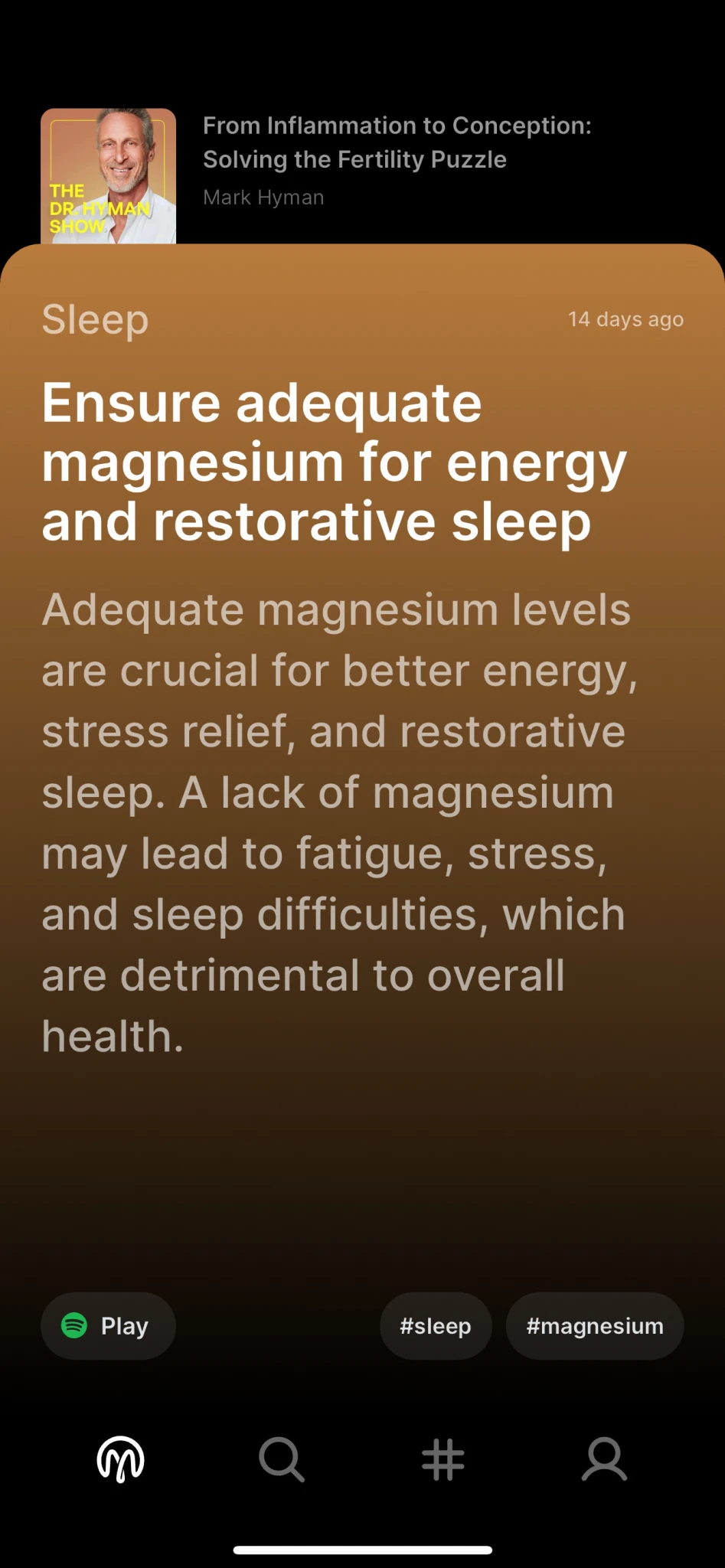
Recognize magnesium's role in activating creatine

Magnesium is an indispensable co-factor required to activate creatine into its usable phosphocreatine form, yet its importance is often overlooked.

Enhance creatine absorption by mixing with hot coffee

Putting creatine in a hot beverage like coffee dramatically increases its solubility, which may lead to four times higher plasma levels and better absorption into the brain.

DESCARGA LA APLICACIÓN

Descubre la sabiduría de la longevidad

DESCARGA LA APLICACIÓN

Descubre la sabiduría de la longevidad

DESCARGA LA APLICACIÓN

Descubre la sabiduría de la longevidad