AI Expert Says: Humans Are Just Mystical Meat Robots
Dave Asprey
Mar 10, 2026

Episode description
What if understanding how AI thinks could reveal uncomfortable truths about how your own brain works, and give you powerful tools to make smarter decisions, resist manipulation, and upgrade your cognition at the root level?
-Watch this episode on YouTube for the full video experience: https://www.youtube.com/@DaveAspreyBPR
Host Dave Asprey sits down with Tom Griffiths, the Henry R. Luce Professor of Information Technology, Consciousness, and Culture in the Departments of Psychology and Computer Science at Princeton University. Griffiths directs Princeton's Computational Cognitive Science Lab, a research group focused on understanding the mathematical foundations of human cognition, and the Princeton Laboratory for Artificial Intelligence. He is the coauthor of Algorithms to Live By and the author of the new book The Laws of Thought, and his award-winning research has appeared in Science, Nature, and the Proceedings of the National Academy of Sciences.
Together, Dave and Tom go deep on the cognitive science behind human performance, brain optimization, and the surprising overlap between biohacking and artificial intelligence. They explore why your body filters reality before your conscious brain ever sees it, how your mitochondria function as a distributed cognitive network, and what that means for longevity, decision-making, and neuroplasticity.
You'll Learn:
Why AI models reveal that humans may be more "stochastic parrots" than we'd like to admit
How your mitochondria pre-process sensory reality before your auditory cortex even fires
Why emotions like anger, love, and remorse are computational tools evolution built into your reward function
How low energy and blood sugar directly degrade your decision-making at a hardware level
What "resource rationality" means and how to use it to make better decisions under constraint
Why AI systems have measurable psychological personalities, and which ones are least likely to mess with your head
How neuroplasticity can eliminate the inner critic and reshape your mental operating system
Why two-process cognition (fast and slow thinking) is a feature, not a bug, of human intelligence
Thank you to our sponsors!
-BEYOND Biohacking Conference 2026 | Register with code DAVE300 for $300 off https://beyondconference.com
-Essentia | Go to https://myessentia.com/dave and use code DAVE for $100 off The Dave Asprey Upgrade.
-Quantum Upgrade | Try it free for 15 days — no credit card required — at
Mindsip insights from this episode:
Challenge assumptions about inner voice and mental imagery
A portion of the population does not experience an internal monologue or mental imagery, challenging common assumptions about how the human mind works.

Understand life's survival algorithm based on four fundamental drives
The most fundamental algorithm for all life, from bacteria to humans, is based on a hierarchy of four drives: fear, food, fertility, and friend.
Understand body as reality pre-processor for brain
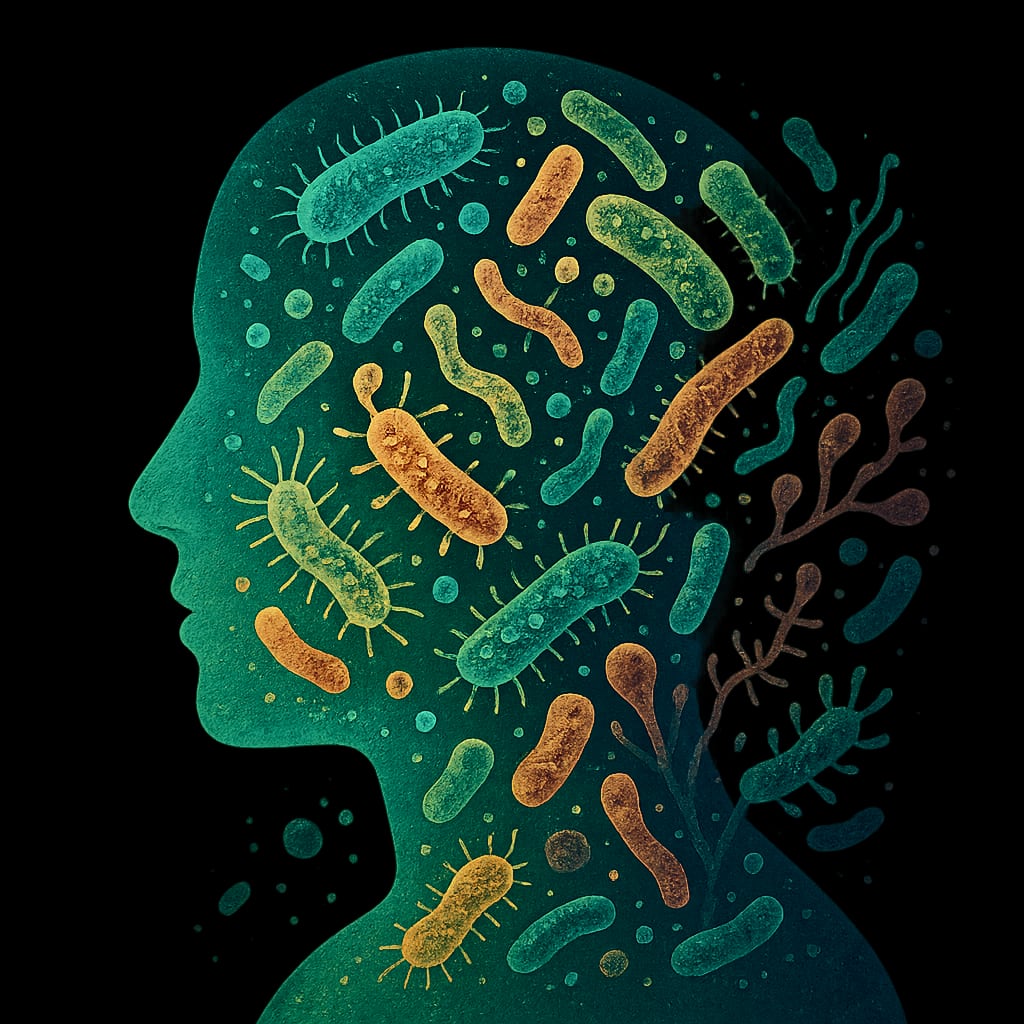
The body acts as a reality pre-processor for the brain, where trillions of mitochondria sense the environment and decide what information and emotions to pass on.
Reevaluate human intelligence in light of AI advancements
The success of AI models suggests that human intelligence may be less unique than we think, and we might also be little more than complex predictive machines.
Utilize heuristic decisions to conserve cognitive resources during low energy
Making a quick, heuristic-based decision when you are low on energy is a perfectly rational way to effectively use your finite cognitive resources.
Leverage anger as a strategic tool in negotiations
Anger can be understood as a game-theory tactic that signals an irrational commitment to a course of action, forcing an opponent to back down.
Signal commitment through love to enhance desirability
The capacity to fall in love makes you a more desirable partner because it signals an irrational commitment that goes beyond a purely transactional relationship.

Utilize remorse to shape better future decisions
Remorse is a tool your planning brain uses to train your instinctive brain by making you feel bad about a past action, shaping better future decisions.
More from
Dave Asprey

This Ancient Hack Reverses Aging In 72 Hours

Jordan Harbinger: Fight-or-Flight, Two Kidnappings, and the Wallet Ruining Your Spine

The Foods, Drinks, and Daily Habits Wrecking Your Brain (Surprising!) | David Perlmutter

The 1910 Secret: How Light Turns Water Into Medicine | Brain Richards

I Tried EVERY Legal Focus Drug, Here’s What Actually Works
You also might be interested in
How to Improve Your Memory & Cognitive Function at Any Age | Dr. Alan Castel

How Brain Inflammation Drives Depression, Alzheimer's, and Parkinson's

Danny McBride on Leaving Hollywood, the Collapse of Comedy & Doomscrolling’s Impact
Your Nervous System Controls Your Gut, Hormones, and Weight — Here's How to Fix It

Pro Athlete Performance Doctor on Nicotine, Peptides, Wearables, and Expensive Youth Sports