
How Genes Shape Your Risk Taking & Morals | Dr. Kathryn Paige Harden
Andrew Huberman
Feb 9, 2026
Episode description
Dr. Kathryn Paige Harden, PhD, is a psychologist, behavioral geneticist and professor of psychology at the University of Texas at Austin. We discuss how genes interact with your upbringing to shape your level of risk-taking and morality. We also discuss how genes shape propensity for addiction and impulsivity in males versus females. Finally, we discuss how biology impacts societal views of sinning, punishment and forgiveness.
Show notes: https://go.hubermanlab.com/jKPoOgG
Pre-order Protocols: https://go.hubermanlab.com/protocols-yt
Thank you to our sponsors
AG1: https://drinkag1.com/huberman
BetterHelp: https://betterhelp.com/huberman
Lingo: https://hellolingo.com/huberman
Our Place: https://fromourplace.com/huberman
Helix Sleep: https://helixsleep.com/huberman
Huberman Lab
Instagram: https://www.instagram.com/hubermanlab
Threads: https://www.threads.net/@hubermanlab
X: https://twitter.com/hubermanlab
Facebook: https://www.facebook.com/hubermanlab
TikTok: https://www.tiktok.com/@hubermanlab
LinkedIn: https://www.linkedin.com/in/andrew-huberman
Website: https://www.hubermanlab.com
Dr. Kathryn Paige Harden
Website: https://www.kpharden.com
Newsletter: https://kathrynpaigeharden.substack.com
Original Sin (new book): https://amzn.to/4r7dDxV
The Genetic Lottery (book): https://amzn.to/3Oec56q
Academic profile: https://liberalarts.utexas.edu/psychology/faculty/kh24738
Instagram: https://www.instagram.com/kathrynpaigeharden
X: https://x.com/kph3k
The Texas Twin Project: https://sites.la.utexas.edu/twinproject/what-weve-found
Publications: https://scholar.google.com/citations?user=az3EwhEAAAAJ&hl=en
Timestamps
00:00:00 Kathryn Paige Harden
00:03:10 Adolescents, Genes & Life Trajectory; Adolescence Ages
00:06:44 Puberty, Aging & Differences; Epigenome; Cognition
00:14:05 Sponsors: BetterHelp & Lingo
00:16:45 Puberty Onset & Family; Communication & Empathy
00:22:26 7 Deadly Sins, Substance Use & Conduct Disorders, Genes
00:27:33 Family History; Genes & Brain Development
00:33:05 Personality & Temperament, Motivation, Addiction; Trauma
00:37:59 Knowing Genetic Risk & Outcomes; Understanding Family History
00:46:06 Sponsor: AG1
00:46:57 Genetic Information & Decision Making; Personal Identity & Uncovering Family
00:52:12 Nature vs Nurture, Bad Genes?; Aggression, Childhood & Males
01:00:17 The Original Sin; Whitman Case & Brain Tumor; Genetic Predisposition
01:10:31 Free Will; Genes & Moral Judgement; Skillful Care for Kids; Social Cooperation
01:21:03 Breaking the Cycle; Genetic Recombination & Differences; Identity
01:25:21 Sponsor: Our Place
01:27:01 Status, Dominance, Science; Positive Attributes of Negative Traits
01:36:15 Relational Aggression & Girls; Male-Female Differences & Conflict
01:40:36 Genes, Boys vs Girls, Impulse Control
01:45:00 Behavior Punishment vs Rewards, Responsibility
01:51:29 Sponsor: Helix Sleep
01:53:03 Accountability; Suffering, Cancel Culture & Punishment
02:00:01 Life Energy & Punishment, Prison
02:08:16 Backward vs Forward-Looking Justice; Forgiveness, Retribution, Power, Choice
02:16:11 Reward, Unfairness & Inequality
02:21:59 Punishment, Reward & Power; Online vs In-Person Communities
02:29:49 Identical Twin Differences; Genetic Influence & Age; Sunlight & Genes
02:39:24 Zero-Cost Support, YouTube, Spotify & Apple Follow, Reviews & Feedback, Sponsors, Protocols Book, Social Media, Neural Network Newsletter
#HubermanLab #Genetics #Science
Disclaimer & Disclosures: https://www.hubermanlab.com/disclaimer
Mindsip insights from this episode:
Understand puberty timing to predict lifespan outcomes
For girls, earlier pubertal timing predicts a shorter lifespan, while for boys, a rapid pace of puberty is linked to more emotional difficulty.

Recognize children as unique products of genetic recombination
Because genes recombine in novel ways with every generation, each child is a new 'product' rather than a simple 'reproduction' of their parents.

Recognize dangers of low genetic risk perception for alcoholism
Telling someone they have a low genetic risk for a disorder like alcoholism can be dangerous, as they might interpret it as a license for risky behavior.

Train epigenetic clock on puberty to understand biological aging
An epigenetic clock can be trained on pubertal development, and faster pubertal development is linked to faster biological aging later in life.
Close impulse control gap by age 24 for men
It takes men until about age 24 to develop the same level of impulse control as an average 15-year-old girl.

Acknowledge brain's desire for punishment as primal instinct
The brain experiences a dopamine reward when seeing a wrongdoer punished, suggesting a lust for punishment similar to other primal desires.
Recognize addiction as a neurodevelopmental disorder influenced by genetics
Genes linked to addiction and impulsivity are most active in the womb during the second and third trimesters, affecting the brain's early development.
Recognize cruelty as a societal currency for justice
The pleasure derived from seeing a wrongdoer punished can be seen as a 'cruelty currency,' where society is 'paid back' by witnessing suffering.
More from
Andrew Huberman
How to Improve Your Memory & Cognitive Function at Any Age | Dr. Alan Castel

Raising a Dog & Mastering Calm Assertive Energy | Cesar Millan

Essentials: Tools for Hormone Optimization in Males | Dr. Kyle Gillett

Movement Practice to Strengthen Your Mind-Body Connection | Ido Portal

Essentials: The Science of Eating for Health, Fat Loss & Lean Muscle | Dr. Layne Norton
You also might be interested in
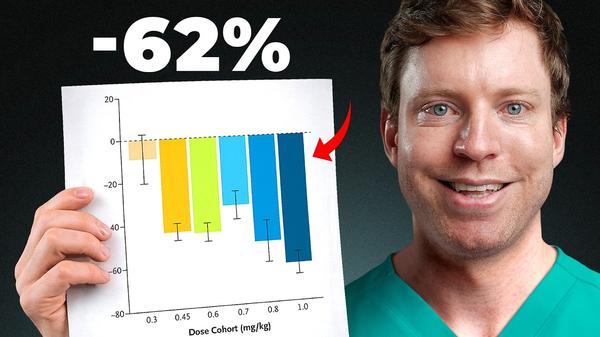
Did One Tiny Tweak Just Solve Heart Disease?

A-List Celebrities' Anti-Aging Hack to Look 30 At 50 (Drug-free)

EXOSOMES: Everything You Need To Know About the Darling Molecules of the Anti-Aging Industry, With JuveXO's Brian Pla.

Exosomes vs Stem Cells and LIFE-CHANGING Advice with Harvard Physician Dr. Edward Park

CRISPR and the future of gene editing: scientific advances, genetic therapies, disease treatment potential, and ethical considerations | Feng Zhang, Ph.D.