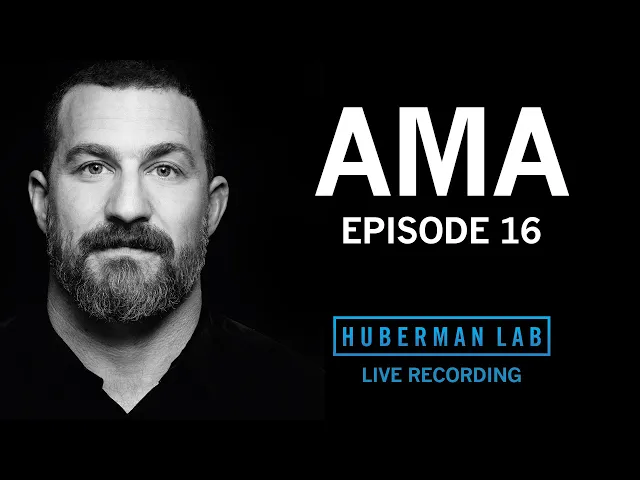
AMA #16: Sleep, Vertigo, TBI, OCD, Tips for Travelers, Gut-Brain Axis & More
Andrew Huberman
29 feb 2024
Mindsip insights from this episode:
Override vertigo by focusing on a point and moving your finger
To combat vertigo or motion sickness, you can override incorrect inner-ear signals by fixating on a point and slowly moving your finger toward your nose to force the visual system to dominate.

Elevate feet to enhance glymphatic flow for brain health
Sleeping with your feet slightly elevated by 5 to 15 degrees is known to increase glymphatic flow, which can help clear debris from the brain, especially after a traumatic brain injury.

Limit curcumin intake to avoid negative health effects
Taking high doses of curcumin or turmeric supplements can have negative effects, such as limiting DHT production, and some turmeric sources have been shown to have lead contamination.

Utilize creatine to enhance recovery from traumatic brain injury
Taking 5 to 10 grams of creatine monohydrate per day may enhance brain function and aid recovery, particularly for those who have experienced a traumatic brain injury (TBI).
Aim for over 1 gram EPA omega-3 for antidepressant effects
To achieve a mild to moderate antidepressant effect from fish oil, aim for a daily intake of over 1 gram of the EPA form of omega-3, not just 1 gram of total fish oil.

Gently brush your tongue with a soft toothbrush
Dentists recommend gently brushing your tongue with a separate, soft toothbrush without toothpaste, as scraping can be too harsh.
Recover lost sleep with Non-Sleep Deep Rest protocol
If you wake up feeling unrested after only 5-6 hours of sleep, doing a 10-30 minute Non-Sleep Deep Rest (NSDR) protocol before getting out of bed can help you recover.
Use portable red light to lower cortisol and improve sleep while traveling
A simple, portable red light bulb can be used in the evenings while traveling to lower cortisol levels and make it easier to fall asleep.
Challenge misleading sleep scores to enhance performance
According to research, receiving a poor sleep score can negatively impact your performance due to the belief effect, even if you actually slept well.
More from
Andrew Huberman
Optimizing Workspace for Productivity, Focus & Creativity | Huberman Lab Essentials
Best Ways to Build Better Habits & Break Bad Ones | James Clear
Essentials: Micronutrients for Health & Longevity | Dr. Rhonda Patrick
Defining Healthy Masculinity & How to Build It | Terry Real
Essentials: How to Optimize Your Hormones for Health & Vitality | Dr. Kyle Gillett
You also might be interested in
Your Brain Has A Sleep Switch (Do THIS To Turn It On)
How To COOL Your Body For Better Sleep, INCREDIBLE Travel Sleep Tips & Orion Vs. Eight Sleep With Dr. Michael Breus

Everything You Need To Know About Sleeping Better, Hacking Sleep, Sleep Cycles, Insomnia, Sleep Apnea & More With Dr. Daniel Gartenberg (Best of LIFE Network's Experts!)

This Commonly Missed Disease Can Rapidly Age Your Brain
This Commonly Missed Diagnosis Leads to Rapid Brain Aging