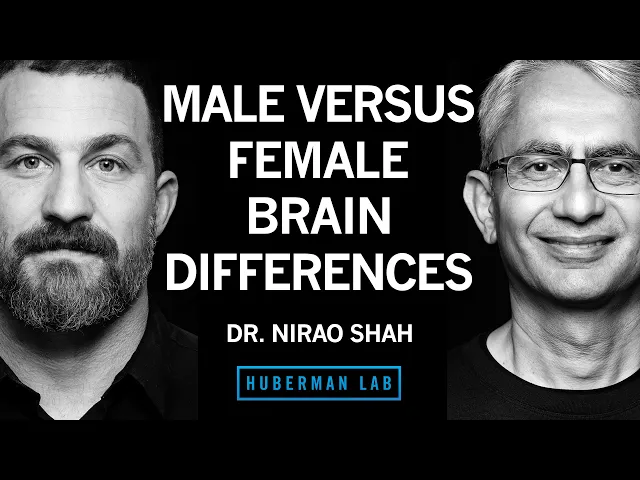
Male vs. Female Brain Differences & How They Arise From Genes & Hormones | Dr. Nirao Shah
Andrew Huberman
28 jul 2025
Mindsip insights from this episode:
Understand estrogen's role in masculinizing the male brain
In the male brain, testosterone is converted into estrogen by an enzyme called aromatase, and it is this estrogen that is primarily responsible for masculinizing brain circuits.
Activate latent opposite-sex circuits with testosterone in female brains
Adult female mice given testosterone will display male sexual behaviors, indicating the underlying neural circuit exists but is normally inactive due to the absence of the hormone.
Recognize irreversible sex-specific brain circuits from early hormones
Early life hormones cause irreversible, sex-specific cell death in the brain, meaning males and females permanently lose different sets of neurons that cannot be recovered in adulthood.
Understand femaleness as a default genetic pathway
Unlike the SRY gene for maleness, no single gene has been identified in mammals that determines femaleness; it appears to be the genetically programmed default pathway in the absence of SRY.
Activate neurons to eliminate post-ejaculatory refractory period
Activating a small population of about 2,500 neurons in the male mouse hypothalamus can reduce the post-ejaculatory refractory period from several days to a single second.
Understand 'penis at 12' syndrome and its genetic implications
A rare genetic condition where individuals lack the enzyme to convert testosterone to the more potent DHT causes them to be born appearing female, only to spontaneously grow a penis at puberty.
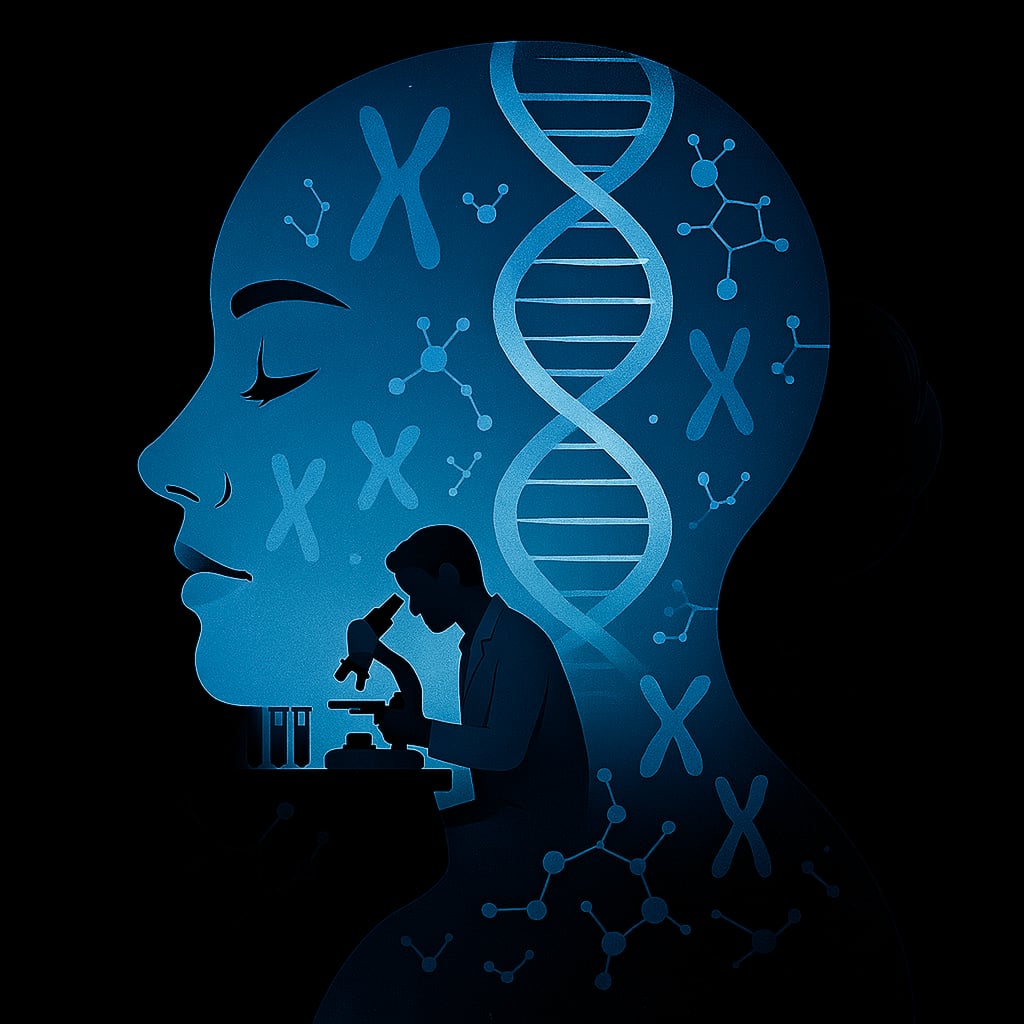
Understand SRY gene's role in determining biological maleness
The presence of a single gene, SRY, not the entire Y chromosome, is the primary biological determinant of maleness, and its absence results in the default female developmental pathway.
Understand cyclical rewiring of female brain for enhanced cognition
In adult female rodents, some neural pathways can dramatically change, showing a threefold increase or decrease in connectivity every five days in sync with the ovulatory cycle.

Reevaluate oxytocin's role in monogamous behavior
Contrary to popular belief, prairie voles genetically engineered to lack oxytocin receptors still form monogamous pair bonds, suggesting oxytocin is not essential for this behavior.

More from
Andrew Huberman

Optimizing Workspace for Productivity, Focus & Creativity | Huberman Lab Essentials

Best Ways to Build Better Habits & Break Bad Ones | James Clear
Essentials: Micronutrients for Health & Longevity | Dr. Rhonda Patrick

Defining Healthy Masculinity & How to Build It | Terry Real

Essentials: How to Optimize Your Hormones for Health & Vitality | Dr. Kyle Gillett
You also might be interested in

Office Hours: Cholesterol and Heart Disease — What I’ve Changed My Mind About

Aging Starts In Your Legs (Here’s The Fix)

The Surprising Science Of Injecting Young Blood, Salmon Sperm & Stem Cells Into Your Face (And Other Places) With Dr. Khanh Nguyen

How To Be "Forever Strong", Creating The Right Amount of FRICTION In Your Life, Official Protein Rules & More, With Dr. Gabrielle Lyon
Why Men’s Fertility Is Collapsing and What It Means for Our Future | Dr. Michael L. Eisenberg