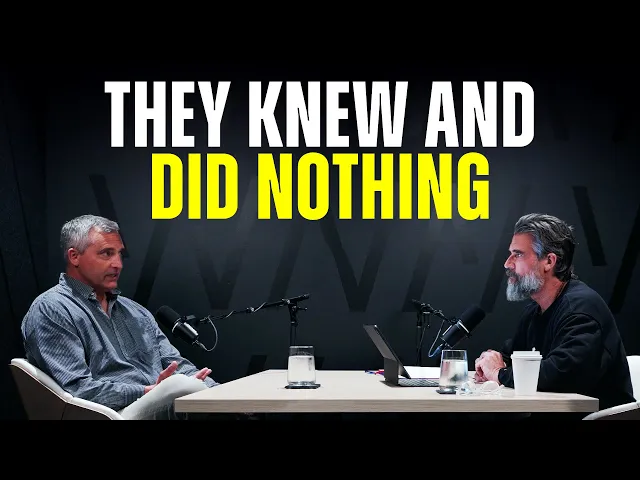
The Olympic Lie: What They Don't Tell You
Rich Roll
28 jul 2025
Mindsip insights from this episode:
Focus on athletes who hate to lose for Olympic success
According to a legendary coach, the Olympic team is comprised of the 20% of athletes who hate to lose, rather than the 80% who love to win.

Recognize insecurity as a driver of elite performance
The intense competitiveness and "hate to lose" mentality of many top performers is often driven by ego and insecurity, which can be a double-edged sword for mental health.

Master your mind and build resilience through specialization in sports
You can use specialization not to master a result, like hitting a target, but as a process to master your own mind and build resilience.
Transform desperation into strength by sharing mental health struggles
Michael Phelps's decision to first speak openly about his mental health struggles was not a calculated plan but an act of desperation that ultimately made him feel stronger.
Visualize desired emotions for competitive success
A powerful visualization technique is to rehearse the desired emotional state you want to feel during competition, such as calm and confidence, rather than just the physical movements.
Reconnect national governing bodies with athletes' needs for development
National governing bodies are often disconnected from athletes' daily struggles, as their primary focus is on marketing the sport and generating sponsorships, not athlete development.
Address post-Olympic blues for smoother transitions
The overwhelming majority of Olympic athletes suffer from "post-Olympic blues," a very difficult transition back to normal life after the games, regardless of their performance.
Recognize irrelevance of elite athletic skills in life
The specific skills that separate the best athletes from the great ones, like being a fraction of a second faster, are often completely irrelevant and non-transferable to the rest of life.

Confront void after winning Olympic gold medal
Winning an Olympic gold medal can be more problematic than losing because it eliminates the one potential answer to an athlete's problems, often leaving a void.
More from
Rich Roll

Mark Manson's No Bullsh*t Guide To Real Change In 2026
The 18 BEST Conversations In Service of Transformation | Best of 2025 Part 2
The 18 Conversations That CHANGED Us In 2025 | Best of 2025 Part 1
#1 Nutrition Scientist: This Is Why You Struggle To Lose Weight | Kevin Hall, PhD

This Is How You Start Over Stronger: A Reinvention Masterclass | Gregg Renfrew
You also might be interested in
This Brain Trick Feels Like Cheating (Do THIS)
Optimizing Workspace for Productivity, Focus & Creativity | Huberman Lab Essentials
This Is Why You Break Every New Year’s Resolution — And How To Finally Stop | Shadé Zahrai

Why Mental Illness Is a Metabolic Problem—and What That Means for Your Health | Dr. Chris Palmer
Best Ways to Build Better Habits & Break Bad Ones | James Clear