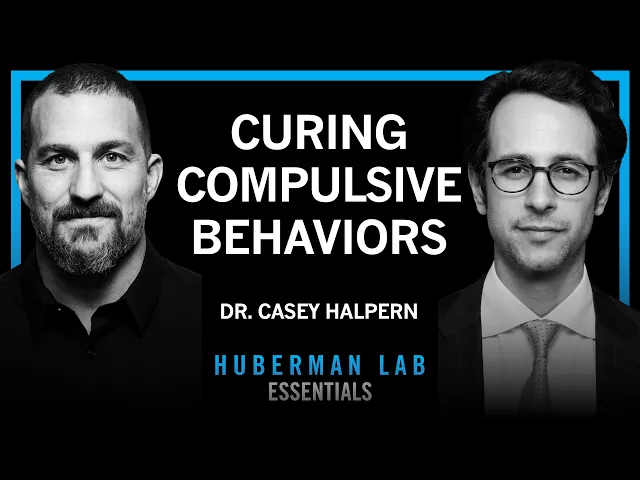
Essentials: Compulsive Behaviors & Deep Brain Stimulation | Dr. Casey Halpern
Andrew Huberman
May 7, 2026
Episode description
In this Huberman Lab Essentials episode, my guest is Dr. Casey Halpern, MD, a professor of neurosurgery at the Perelman School of Medicine at the University of Pennsylvania. We discuss how deep brain stimulation and other neuromodulation approaches are being used to treat Parkinson's disease, obsessive-compulsive disorder (OCD), binge eating disorder and depression-related symptoms. We also explore the brain circuits that drive compulsions, cravings and impulsivity, as well as emerging non-invasive tools for predicting and treating harmful behaviors.
Show notes: https://go.hubermanlab.com/QTgU0Jx
Watch more Huberman Lab Essentials: https://youtube.com/playlist?list=PLPNW_gerXa4OGNy1yE-W9IX-tPu-tJa7S&si=a1_sA7rUT-fE0OM5
Huberman Lab
Instagram: https://www.instagram.com/hubermanlab
Threads: https://www.threads.net/@hubermanlab
X: https://x.com/hubermanlab
Facebook: https://www.facebook.com/hubermanlab
TikTok: https://www.tiktok.com/@hubermanlab
LinkedIn: https://www.linkedin.com/in/andrew-huberman
Website: https://www.hubermanlab.com
Newsletter: https://www.hubermanlab.com/newsletter
Dr. Casey Halpern
Penn Medicine Profile: https://www.pennmedicine.org/providers/profile/casey-halpern
X: https://x.com/halpernc
LinkedIn: https://www.linkedin.com/in/casey-halpern-a1569749
Timestamps
00:00:00 Casey Halpern
00:00:20 Neurosurgery, Deep Brain Stimulation
00:04:19 Obsessive-Compulsive Disorder (OCD) & Treatments
00:10:11 OCD Brain Areas, Addiction
00:12:34 Nucleus Accumbens, Risk & Rewards; Binge Eating Disorder
00:16:50 Non-Invasive Brain Stimulation, Transcranial Magnetic Stimulation
00:24:33 Awareness of Cravings, Severe Binge Eating Disorder
00:28:38 Artificial Intelligence/Machine Learning & Predicting Impulsive Behavior
00:32:44 Acknowledgements
#hubermanlab
Disclaimer & Disclosures: https://www.hubermanlab.com/disclaimer
Mindsip insights from this episode:
Utilize non-invasive ultrasound for brain surgery without incisions
Transcranial focused ultrasound is an FDA-approved, non-invasive method that can create an ablation in the brain to treat tremor without a single incision.

Develop non-invasive tools through invasive brain research
The philosophy is that we must first get into the brain with invasive methods to understand its signals before we can develop effective and precise non-invasive tools like ultrasound or AI.
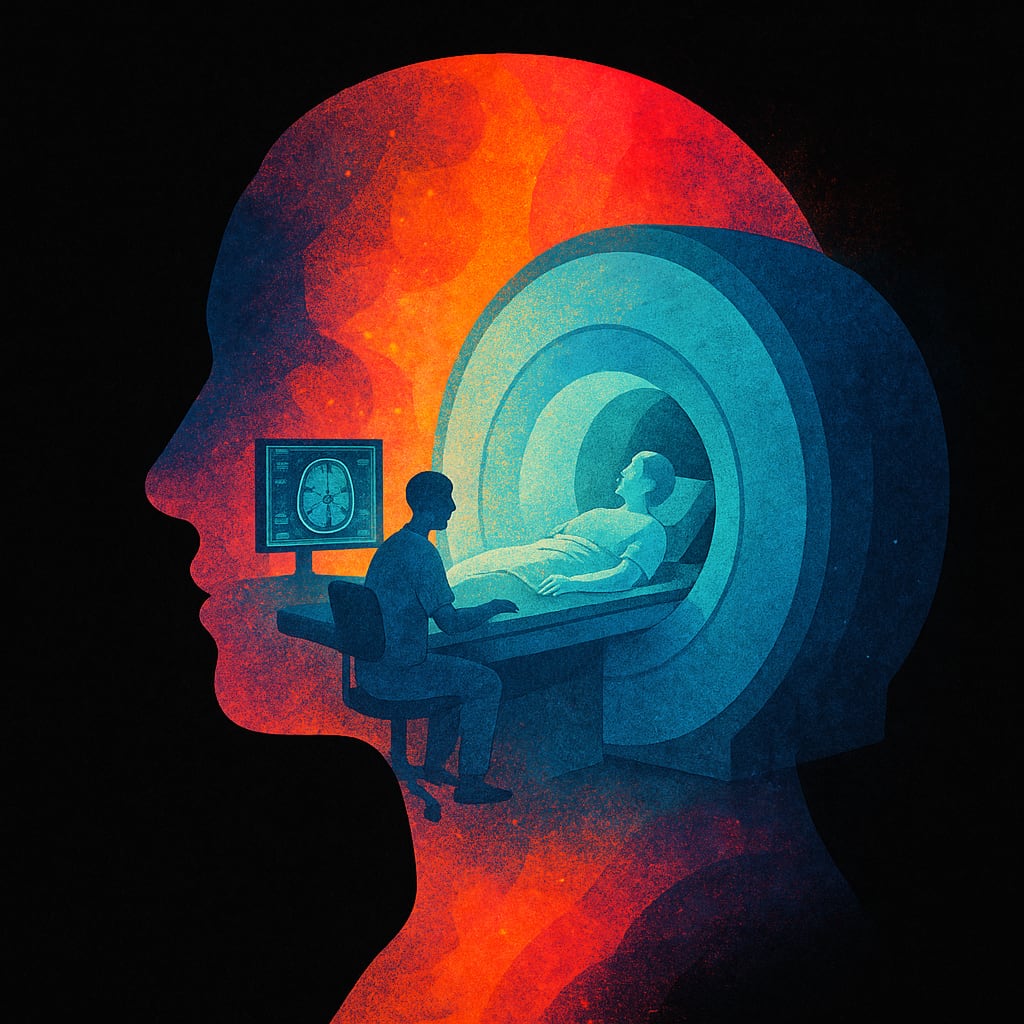
Leverage OCD traits as professional assets
OCD exists on a spectrum, and when controlled, the obsessive and compulsive traits can be an asset for professionals like surgeons and CEOs.
Discover therapeutic potential of DBS side effects
Accidentally stimulating brain areas near a target can cause side effects like laughter, which has helped researchers discover new therapeutic uses for deep brain stimulation in conditions like depression.

Utilize epilepsy mapping to discover new mental health treatment targets
A technique used to map seizures in epilepsy patients by implanting tiny electrodes (stereoencephalography) is now being used to study and find new brain targets for mental health disorders like depression and OCD.
Understand nucleus accumbens role in addiction and compulsive behaviors
The nucleus accumbens is a key brain region that acts as a common denominator for addiction, OCD, and eating disorders, driving the urge to perform a behavior despite known risks.
Recognize limits of awareness in binge eating disorder
In a lab setting, even when patients with severe binge eating disorder are fully aware they are being studied, they will still binge because the urge is uncontrollable.
Utilize targeted brain tissue destruction for safe treatment
It is amazing that you can destroy small parts of the brain, just three or four millimeters in size, to treat a condition without causing any obvious side effects.
Identify craving cells to understand binge eating disorder
Similar to how surgeons can listen for 'tremor cells' in Parkinson's patients, researchers are now able to identify 'craving cells' in patients with binge eating disorder.
More from
Andrew Huberman
How to Improve Your Memory & Cognitive Function at Any Age | Dr. Alan Castel

Raising a Dog & Mastering Calm Assertive Energy | Cesar Millan
Essentials: Tools for Hormone Optimization in Males | Dr. Kyle Gillett

Movement Practice to Strengthen Your Mind-Body Connection | Ido Portal

Essentials: The Science of Eating for Health, Fat Loss & Lean Muscle | Dr. Layne Norton
You also might be interested in

Jordan Harbinger: Fight-or-Flight, Two Kidnappings, and the Wallet Ruining Your Spine

How Brain Inflammation Drives Depression, Alzheimer's, and Parkinson's

Danny McBride on Leaving Hollywood, the Collapse of Comedy & Doomscrolling’s Impact
Your Nervous System Controls Your Gut, Hormones, and Weight — Here's How to Fix It

I Tried EVERY Legal Focus Drug, Here’s What Actually Works