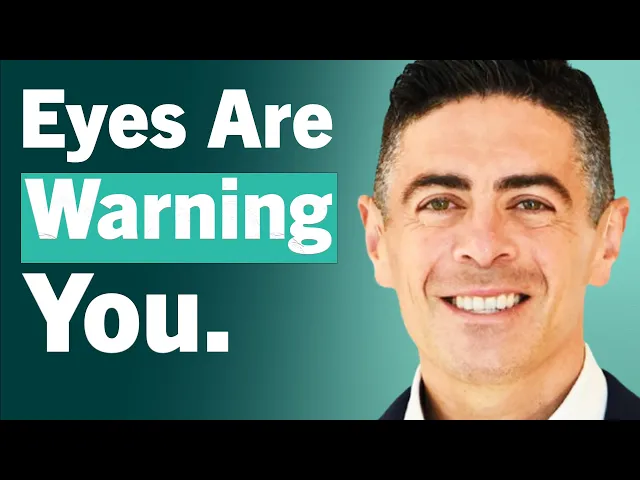
Brain Expert: 'If You Have Brain Fog, Fatigue or Burnout — It Might Be Your Eyes!' | Bryce Appelbaum
Rangan Chatterjee
Sep 10, 2025
Episode description
This episode is brought to you by:
TIMELINE: Get 25% off your order of Mitopure https://timeline.com/livemore
Download my FREE Habit Change Guide HERE: https://links.drchatterjee.com/46vqn9t
When we think about improving our health, we often think about changing our diet, increasing how much we move, improving the quality of our sleep and lowering stress, but how many of us think about ‘working’ on our vision? Every day, many of us experience symptoms like brain fog, fatigue, headaches or poor concentration - and never realise that our eyes might be playing a central role
.
This week, I’m delighted to welcome Dr Bryce Appelbaum, a pioneering neuro-optometrist who believes that vision is our most overlooked and underutilised tool for improving how we feel, think and function. Bryce is a board-certified Fellow of the College of Optometrists in Vision Development and founder of MyVisionFirst , where he and his team combine vision therapy with principles from occupational therapy, physical therapy and holistic wellness.
Bryce’s expertise includes reorganising the visual brain after concussion, correcting developmental visual delays that interfere with reading and learning and enhancing visual skills to elevate athletic performance.
In this incredible conversation, we discuss:
- Why eyesight and vision are not the same, and why most eye tests are missing a vital part of the picture
- How visual processing affects everything from focus and mood to movement, memory and resilience
- The hidden visual problems that are often left undiagnosed in both children and adults, and how these can impact learning, behaviour and emotional regulation
- The neurological impact of concussion and trauma on the visual system, and how it can be rehabilitated
- Why our screen habits are damaging not just our eyes but our brains - and how to reverse the effects
- The power of “vision therapy” to rewire the brain and transform quality of life
- Practical strategies to reduce digital eye strain and support visual health, even if you only have a few minutes a day
Many of us don’t realise just how much our vision influences how we think, feel and perform. In a screen-heavy world, Bryce’s insights show that with the right tools, we can train our eyes and brain to support better health, learning and quality of life at any age.
#feelbetterlivemore
----
Connect with Bryce Appelbaum:
Website https://www.myvisionfirst.com
Facebook https://www.facebook.com/myvisionfirstoptometry
Instagram https://www.instagram.com/drbryceappelbaum/
YouTube: https://www.youtube.com/@drbryceappelbaum
MyVisionFirst Resources:
Take the FREE Vision Assessment: https://bit.ly/3HWdrQA
Get the FREE Vision Health Guide: https://bit.ly/3JEeoNZ
Get $200 off ScreenFit using code: LIVEMORE at https://www.screenfit.com/livemore
#feelbetterlivemore #feelbetterlivemorepodcast
-------
Order MAKE CHANGE THAT LASTS. US & Canada version https://amzn.to/3RyO3SL, UK version https://amzn.to/3Kt5rUK
-----
Follow Dr Chatterjee at:
Website: https://drchatterjee.com/
Facebook: https://www.facebook.com/drchatterjee
Twitter: https://twitter.com/drchatterjeeuk
Instagram: https://www.instagram.com/drchatterjee/
Newsletter: https://drchatterjee.com/subscription
DISCLAIMER: The content in the podcast and on this webpage is not intended to constitute or be a substitute for professional medical advice, diagnosis, or treatment. Never disregard professional medical advice or delay in seeking it because of something you have heard on the podcast or on my website.
Mindsip insights from this episode:
Differentiate vision from eyesight for better understanding
Vision is how your brain processes visual information to derive meaning and direct action, whereas eyesight is merely a symptom of how well you can see at a certain distance.

Avoid over-the-counter reading glasses to strengthen your vision
Grabbing over-the-counter reading glasses at the first sign of blur is like getting a wheelchair for a sore knee; it stops you from using the focusing system, which then weakens.
Train your vision with ScreenFit program
The ScreenFit program is an online vision training system designed to build the foundational visual skills needed to thrive in a screen-heavy world.
Break free from screens to reduce fight-or-flight response
The tunnel vision required for screen use promotes a physiological stress response, meaning people are often making critical decisions while in a state of fight-or-flight.
Aim for 20/happy to enhance performance with minimal correction
Instead of correcting everyone to a 20/20 standard, the goal should be '20/happy,' which means using the weakest possible lenses that give the most improvement to performance.
Improve myopia with targeted vision performance training
It is possible to improve shortsightedness, as demonstrated by the host who went from 20/400 to 20/70 vision in five days through targeted vision performance training.
Incorporate functional vision assessments for accurate ADHD and dyslexia diagnoses
Diagnoses like ADHD, dyslexia, and learning disabilities are often incomplete without a functional vision assessment, as their symptoms heavily overlap with those of vision problems.
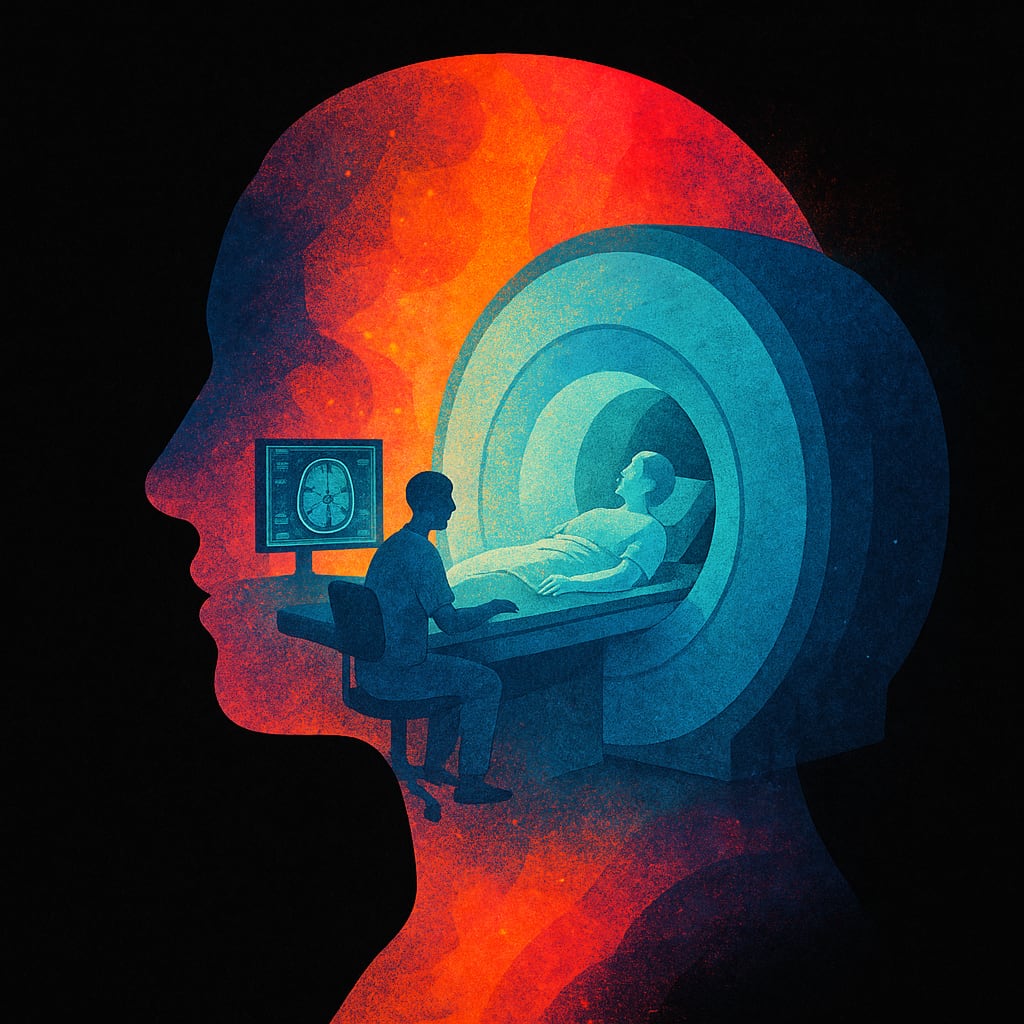
Recognize vision as key to longevity and productivity
In the near future, vision will be recognized as a critical factor influencing longevity, consciousness, happiness, and productivity, much like the microbiome is today.
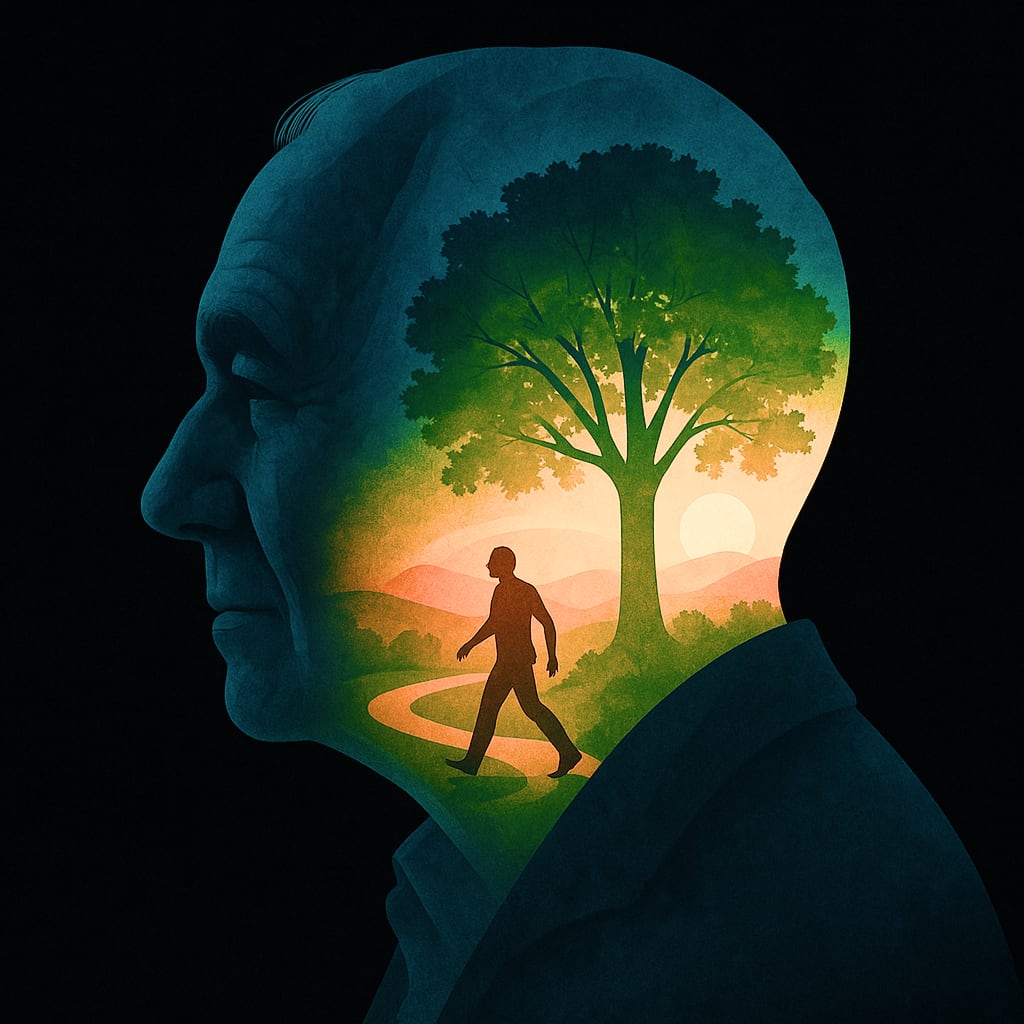
Enhance focus with daily eye push-ups
You can improve the flexibility and stamina of your focusing muscles by performing daily 'eye push-ups,' which involve slowly bringing your thumb toward your nose while keeping it in focus.
More from
Rangan Chatterjee

Sleep Doctor: If You Wake Up Between 1–3 AM, Your Body Is Trying To Warn You | Dr Michael Breus

The Invisible Trap: Evidence You're Living the Wrong Life (& Don't Know It) | Professor C Thi Nguyen

Chronic Stress Is Aging Your Body Faster Than Smoking (Here's How To Reverse It) | Dr Elissa Epel

If You Have These 5 Traits, You Are Far More Protected From Dementia

#1 Aging Expert: Dementia, Diabetes & Heart Disease Start After 40 When You Ignore This
You also might be interested in
Too Much Histamine Is Wrecking Your Body — And Most Doctors Don't Know It

This Ancient Hack Reverses Aging In 72 Hours

The Potent Brain & Body Ketone Fuel You’ve Probably Never Heard Of: The Science Of R3HBG With Tecton’s Dr. Mike Chesne

1 Year of Lutein: Reversing Arterial Plaque

How To Maintain Muscle On A GLP-1, Why Protein Stops Working As You Get Older, The Truth About Eating “Before Bedtime” & More! Solosode #502