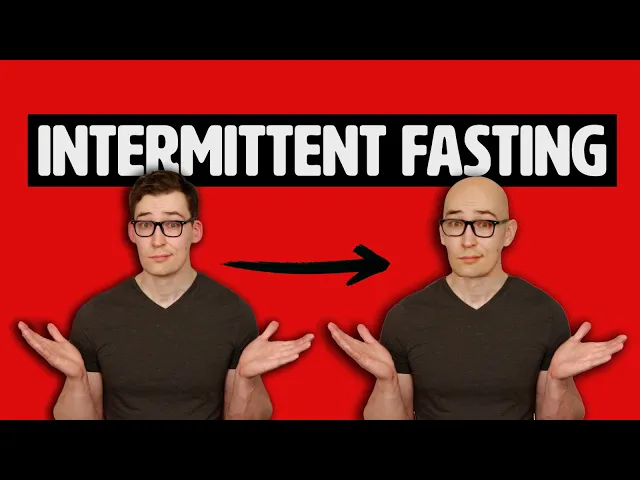
New Study shows Fasting causes Hair Loss
Physionic
Jan 8, 2025
Episode description
*JOIN THE PHYSIONIC INSIDERS [PREMIUM CONTENT]*
Join the Physionic Insiders: https://bit.ly/PhysionicInsiders2
*HEALTH AUTONOMY [COURSE]*
Learn to Analyze & Apply Studies for Yourself: https://bit.ly/healthautonomy
*JOIN THE COMMUNITY*
Join my Community [It’s Free!]: https://bit.ly/PhysionicCommunity2
*EMAIL LIST*
1-2 Weekly Email of Value [It’s Free!]: http://bit.ly/2AXIzK6
*HIRE ME FOR CONSULTING:*
Consulting: https://bit.ly/3dmUl2H
Created with Biorender
0:00 - Introduction
0:39 - The Study
1:49 - Hair Loss?
4:55 - Caveats
5:30 - Main Points
References
[A] Chen H, Liu C, Cui S, et al. Intermittent fasting triggers interorgan communication to suppress hair follicle regeneration. Cell. Published online November 26, 2024. doi:10.1016/j.cell.2024.11.004
********CRITIQUES, RULES, AND NOTES********
Be aware of the following rules before posting comments:
- Please do not post summaries of the video in the comments - it damages retention on the video and YouTube is less likely to promote it (these videos cost me a lot of money to produce).
Critiques of my work are welcome! Please be aware of the following notes & rules before submitting critique:
Be mindful that this content is not all encompassing on the subject at hand and is self-limited for brevity to reach a wider audience. Also, be aware that I receive hundreds of YouTube comments per day, so the only way your critique can be considered is if you follow the steps outlined below. Finally, YouTube auto-deletes links, so I do not see most comments with links attached.
RULES:
If your comment is rude, you will be banned.
If your comment is not about the studies/topics at hand (i.e. extending to other outcomes not discussed) or offers critique with no scientific basis, it is unlikely to receive a response.
If you can follow these rules, I will try to address your critique and if there is merit, I will add an AMENDMENT to the content in question and pin it so everyone can see it (thank you!).
Please use the following link to submit your critique: https://bit.ly/PhysionicCritique
Disclaimer: None of the information provided by this brand is a replacement for your physician's advice. This brand is information for the sake of knowledge and the options of choice it provides, not in any way a personalized prescription. Please consult your physician before making any health related changes.
#hairloss #hairlosscauses
Mindsip insights from this episode:
Limit fasting to maintain hair regrowth rate
In the human trial, a weight-maintenance intermittent fasting diet (18-hour fast) resulted in a statistically significant reduction in the rate of hair regrowth.
Maintain hair density despite slower regrowth in fasting group
Despite a slower regrowth rate in the fasting group, the study found no difference in the actual density of hair shafts on the scalp.
Understand fasting effects: slower hair growth, not loss
The speaker's interpretation is that while fasting may cause hair to grow more slowly, it does not necessarily mean you will lose hair or reduce the number of hairs.
Acknowledge limitations of short human study on hair thickness
The human portion of the study was only about 11 days long, which limits the ability to draw conclusions about long-term effects on hair thickness.

Understand fasting duration differences between mice and humans
An 18-hour fast in a mouse is metabolically equivalent to several days of fasting for a human, which is critical context for interpreting the animal data.
Uncover hidden human trial in fasting and hair loss study
A recent study on fasting and hair loss contained a randomized controlled human trial that was buried within the supplemental mouse data.
More from
Physionic


You also might be interested in
Too Much Histamine Is Wrecking Your Body — And Most Doctors Don't Know It

This Ancient Hack Reverses Aging In 72 Hours

The Potent Brain & Body Ketone Fuel You’ve Probably Never Heard Of: The Science Of R3HBG With Tecton’s Dr. Mike Chesne

How To Maintain Muscle On A GLP-1, Why Protein Stops Working As You Get Older, The Truth About Eating “Before Bedtime” & More! Solosode #502
Essentials: Tools for Hormone Optimization in Males | Dr. Kyle Gillett