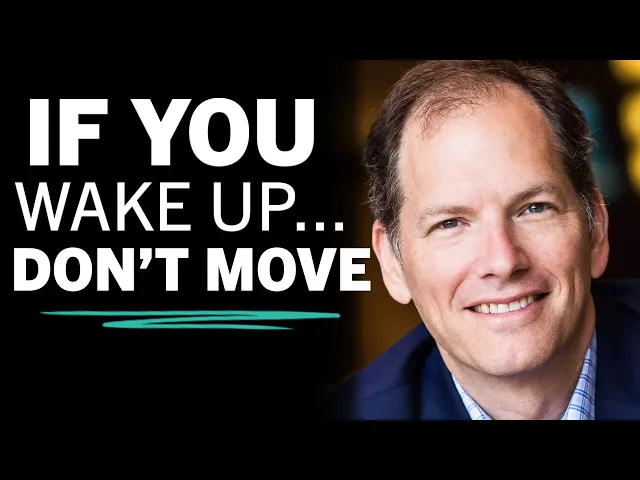
Sleep Doctor: If You Wake Up Between 1–3 AM, Your Body Is Trying To Warn You | Dr Michael Breus
Rangan Chatterjee
Jul 8, 2026
Episode description
The Thrive Tour: Transform Your Health and Happiness, a live show: Book Your Tickets https://drchatterjee.com/live
This episode is brought to you by:
LINGO BY ABBOTT: For users in the US and UK, Lingo by Abbott is offering an exclusive 10% off a 4-week plan with the code LIVEMORE10. Just visit https://hellolingo.com/livemore for more information. Terms and conditions apply.
DO HEALTH: Join thousands who have already started their Do Health journey. Sign up to the waitlist today. Go to https://dohealth.co/livemore and use code LIVEMORE.
“Sleep is a lot like love: the less you look for it, the more it shows up.” So says my guest on this episode, one of the world's leading sleep doctors, who’s here to reveal the five common traps that are stopping us getting the rest we need.
Dr Michael Breus is a clinical psychologist and sleep specialist based in California. He’s the author of several books, including the brilliantly helpful, Sleep, Drink, Breathe. Over the course of his 25-year career, he’s helped thousands of people transform their health by changing the way they sleep. You’ll love his bold, no-nonsense manner and warm, practical advice.
In this conversation, we unpack the sleep myths that are keeping us stuck. We talk about why chasing eight hours could be working against you, why sleeping in at the weekend may be doing more harm than good, and why freaking out about your sleep is making it worse. We also explore what is really happening in your body to cause that 3am wake-up, and the practical techniques that can help you get back to sleep quickly and calmly.
Michael shares his own diagnosis of sleep apnoea, which will surprise you given his background, and opens up a conversation I think many of you will find both reassuring and galvanising. He dispels common myths around testing and treatment, and makes a clear case for investigating your symptoms – it could change your life.
We also cover sleep tracking and how to interpret what your wearables say without driving yourself to distraction. Michael gives his view on the supplements worth considering and those that are not. We talk about the specific challenges facing women going through perimenopause and menopause, and he gives practical advice for shift workers, parents, and carers who feel they can’t get the hours they need.
We close by talking through his five-step plan, which is simple, evidence-based, and immediately actionable. It will help you sleep better from tonight. Wherever you are in your journey towards restful, restorative sleep, you will hear something new in this insightful and surprising conversation. By going back to basics, Michael offers some truly fresh perspectives on this most fundamental pillar of your health.
#feelbetterlivemore
Find out more about Dr Breus:
Website https://sleepdoctor.com/feelbetter
YouTube https://www.youtube.com/@TheSleepDoctor
Instagram https://www.instagram.com/thesleepdoctor/?hl=en
X https://x.com/thesleepdoctor
Tik Tok https://www.tiktok.com/@thesleepdoctor
Facebook https://www.facebook.com/thesleepdoctor/?locale=en_GB
Dr Breus’ book:
Sleep Drink Breathe: Simple Daily Habits for Profound Long-Term Health US https://amzn.to/3SIFeZT UK https://amzn.to/4aC27V1
#feelbetterlivemore #feelbetterlivemorepodcast
-------
Order MAKE CHANGE THAT LASTS. US & Canada version https://amzn.to/3RyO3SL, UK version https://amzn.to/3Kt5rUK
-----
Follow Dr Chatterjee at:
Website: https://drchatterjee.com/
Facebook: https://www.facebook.com/drchatterjee
Twitter: https://twitter.com/drchatterjeeuk
Instagram: https://www.instagram.com/drchatterjee/
Newsletter: https://drchatterjee.com/subscription
DISCLAIMER: The content in the podcast and on this webpage is not intended to constitute or be a substitute for professional
Mindsip insights from this episode:
Lower anxiety to escape sleep trap
Worrying about not sleeping raises your heart rate, temperature, and anxiety, which are the three things that need to be lowered to fall asleep.

Utilize sleep trackers for weekly trend analysis
Sleep trackers are not accurate for measuring deep and REM sleep, but they are useful for looking at weekly trends rather than daily scores.
Utilize non-sleep deep rest for restorative benefits
If you can't fall back asleep, lying quietly in a state of non-sleep deep rest (Yoga Nidra) for an hour is worth about 20 minutes of actual sleep.
Use 4-7-8 breathing to calm a busy mind
To stop a 'monkey mind,' use 4-7-8 breathing while counting 20 cycles on your fingers and picturing the numbers in your head.
Prioritize consistent wake-up time over eight-hour sleep goal
Waking up at the same time every day is more important for regulating melatonin than forcing yourself to get exactly eight hours of sleep.
Recognize sleep apnea symptoms beyond snoring and weight
The speaker, a sleep expert, discovered he had moderate to severe sleep apnea which presented as low energy, not as snoring or being overweight.
Accept waking up at 1-3 AM as a natural body rhythm
Every person on Earth wakes up between 1-3 AM due to a natural dip in core body temperature, so it's not a sign that you did anything wrong.
Recognize quick sleep onset as a sign of sleep deprivation
Falling asleep very quickly, such as in under two minutes, is generally not a good sign and is likely an indicator of sleep deprivation.
Check ferritin levels to address restless leg syndrome
For restless leg syndrome, the first step is to check ferritin levels, as a level below 60, even if considered 'normal,' can cause the symptoms.

More from
Rangan Chatterjee

The Invisible Trap: Evidence You're Living the Wrong Life (& Don't Know It) | Professor C Thi Nguyen

Chronic Stress Is Aging Your Body Faster Than Smoking (Here's How To Reverse It) | Dr Elissa Epel

If You Have These 5 Traits, You Are Far More Protected From Dementia

#1 Aging Expert: Dementia, Diabetes & Heart Disease Start After 40 When You Ignore This

How To Make Life Exciting Again (Every Adult Needs This)
You also might be interested in

Cure Insomnia: Use this Science backed Therapy

Essentials: Sleep Toolkit for Optimizing Sleep & Sleep-Wake Timing

#394 ‒ Sleep pharmacology: the role of medications in healthy sleep, the promise of emerging therapies, and the evidence for common sleep supplements
This Legal Sleep Powder Beats Melatonin Every Time
Low Testosterone Starts In Your Eyes (Avoid This Before Bed)