Neuroscientist: If You Don’t Have These 3 Things After 40, Your Brain Is at Risk For Dementia
Rangan Chatterjee
Mar 18, 2026
Episode description
This episode is brought to you by:
AG1: Get FREE AG1 Flavour Sampler, AGZ Sampler, Vitamin D3+K2 and Welcome Kit with your first AG1 subscription (worth $87, US only) https://bit.ly/43FwxQl
BON CHARGE: Save 20% off all Bon Charge products with code LIVEMORE https://boncharge.com/livemore
PELOTON: Let yourself ride, lift, stretch, move and go. Explore the new Peloton Cross Training Bike+ at https://onepeloton.co.uk
This podcast contains some of the simplest, most effective advice on brain health you will ever hear. It explains why the cognitive decline we expect with age isn’t inevitable at all. And why up to 70 percent of cases of dementia are, in fact, preventable.
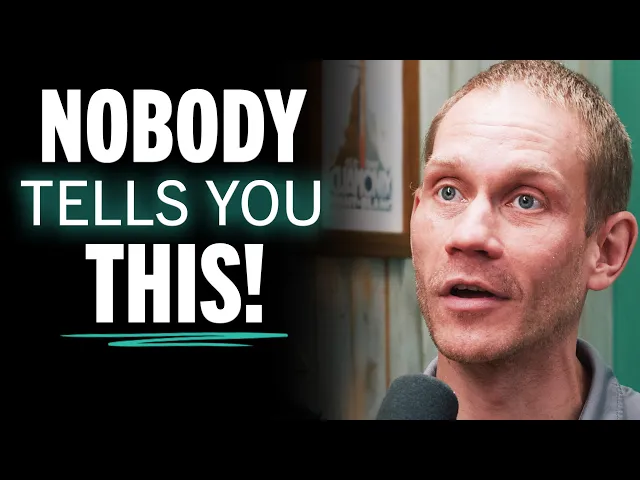
I’m speaking with neuroscientist Dr Tommy Wood, one of the most respected voices on brain health today. He works with Formula One drivers and elite athletes to deliver peak cognitive and physical performance. He’s a researcher whose work spans brain development, traumatic brain injury and dementia – all of which is compellingly distilled into his new book, The Stimulated Mind.
Tommy is a plain speaker and motivating communicator and in this episode he explains why it’s the way you use your brain that matters more than almost anything else you can do for your long-term health. He outlines his 3S framework, Stimulate, Supply and Support, which makes brain health feel like something we can all influence – no expensive supplements or specialist training necessary.
Instead it’s learning new skills, trying complex activities, and staying socially connected that counts. Sure, we need good nutrition and plenty of rest. But without cognitive stimulation our brains can’t develop. It’s as much good, says Tommy, as drinking a protein shake but never lifting a weight!
We discuss different types of exercise and why our brains need a mix of aerobic, resistance and coordinative activities. Tommy describes taking dance classes or practising racquet sports as one of the best things we can do for our brains. So if you’ve ever fancied playing padel or trying tango? Now you’ve got some extra motivation.
Tommy also helps us understand that feeling of being ‘tired yet wired’ – when you’re physically exhausted and mentally overwhelmed, but can’t switch off and rest. I love his solution of restructuring your day around different cognitive gears, to help.
Our conversation is packed with practical advice and evidence-backed insights that I want everyone to hear. Cognitive decline isn’t inevitable. Dementia isn’t your destiny. Whatever your age and whatever your worry, there are so many easy steps you can take, starting today, that are guaranteed to make a difference.
Watch PART 2 here: https://youtu.be/vEhw0CqQ40I
#feelbetterlivemore
Connect with Dr Wood:
Website https://www.drtommywood.com/
Instagram https://www.instagram.com/drtommywood/
Publications https://www.drtommywood.com/publications
X https://twitter.com/DrRagnar
Podcasts: Better Brain Fitness https://www.drtommywood.com/podcast
Dr Wood’s book:
The Stimulated Mind Future-Proof Your Brain from Dementia and Stay Sharp at Any Age
UK https://amzn.to/3Nlzlzy US https://amzn.to/3P4hTjB
#feelbetterlivemore #feelbetterlivemorepodcast
-------
Order MAKE CHANGE THAT LASTS. US & Canada version https://amzn.to/3RyO3SL, UK version https://amzn.to/3Kt5rUK
-----
Follow Dr Chatterjee at:
Website: https://drchatterjee.com/
Facebook: https://www.facebook.com/drchatterjee
Twitter: https://twitter.com/drchatterjeeuk
Instagram: https://www.instagram.com/drchatterjee/
Newsletter: https://drchatterjee.com/subscription
DISCLAIMER: The content in the podcast and on this webpage is not intended to constitute or be a substitute for professional medical advice, diagnosis, or treatment. Never disregard professional medical advice or delay in seeking it because of something you have heard on the podcast or on my website.
Mindsip insights from this episode:
Limit social media use to reduce chronic inflammation
Constantly comparing yourself to others on social media can lower your perceived social rank, creating a stress response that increases chronic inflammation.

Shift perception of exercise to reduce mortality risk
Studies show that people who feel they exercise less than their peers have a higher mortality risk, regardless of how much they actually exercise.

Prioritize brain stimulation over diet for optimal health
In the 3S model for brain health (Stimulus, Supply, Support), stimulating your brain through learning is the primary driver, much like lifting weights is for muscle growth.

Reassess dementia prevention strategies beyond conventional estimates
The Lancet's estimate that 45% of dementia is preventable may be conservative as it excludes risk factors like poor sleep and lack of later-life cognitive stimulation.
Have more children to reduce dementia risk
A UK Biobank study found that having more children was associated with a lower risk of dementia, as the benefits of joy and social connection seem to outweigh the downsides of stress and poor sleep.
Stimulate your brain to improve sleep quality
If you struggle with sleep, it might be because you are not stimulating your brain enough during the day, as cognitively challenging tasks create a greater biological need for sleep.

Prioritize oral health to reduce dementia risk
Poor dental health is an increasingly recognized risk factor for dementia, possibly due to the direct effect of bacteria or the chronic inflammation they create.
Break free from multitasking to overcome wired but tired feeling
The 'wired but tired' feeling often comes from spending the entire workday in a stressful 'middle gear' of multitasking, without periods of deep focus or true rest.
Master complex skills to strengthen critical brain networks
A recent study showed that gaining expertise in diverse complex skills like tango dancing, painting, or even computer games all strengthen the same critical brain networks.
Challenge age-related decline by maintaining active engagement
According to stereotype embodiment theory, expecting cognitive and physical decline as you age can become a self-fulfilling prophecy because you stop doing the activities that maintain function.
More from
Rangan Chatterjee

Sleep Doctor: If You Wake Up Between 1–3 AM, Your Body Is Trying To Warn You | Dr Michael Breus

The Invisible Trap: Evidence You're Living the Wrong Life (& Don't Know It) | Professor C Thi Nguyen

Chronic Stress Is Aging Your Body Faster Than Smoking (Here's How To Reverse It) | Dr Elissa Epel

If You Have These 5 Traits, You Are Far More Protected From Dementia

#1 Aging Expert: Dementia, Diabetes & Heart Disease Start After 40 When You Ignore This
You also might be interested in
How to Improve Your Memory & Cognitive Function at Any Age | Dr. Alan Castel

Jordan Harbinger: Fight-or-Flight, Two Kidnappings, and the Wallet Ruining Your Spine
How Brain Inflammation Drives Depression, Alzheimer's, and Parkinson's

Danny McBride on Leaving Hollywood, the Collapse of Comedy & Doomscrolling’s Impact
Your Nervous System Controls Your Gut, Hormones, and Weight — Here's How to Fix It