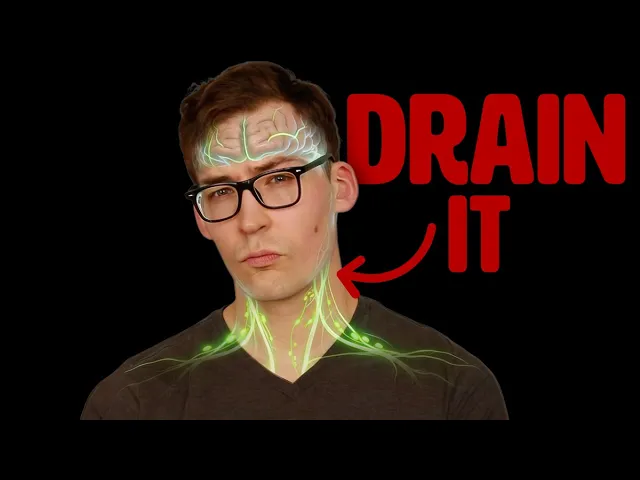
Drain your Brain, Protect it from Alzheimer’s Disease
Physionic
Dec 15, 2025
Episode description
JOIN THE PHYSIONIC INSIDERS [PREMIUM CONTENT]Join the Physionic Insiders: https://bit.ly/PhysionicInsiders2 HEALTH AUTONOMY [COURSE]Learn to Analyze & Apply Studies for Yourself: https://bit.ly/healthautonomyJOIN THE COMMUNITYJoin my Community [It’s Free!]: https://bit.ly/PhysionicCommunity2EMAIL LIST1-2 Weekly Email of Value [It’s Free!]: http://bit.ly/2AXIzK6HIRE ME FOR CONSULTING: Consulting: https://bit.ly/3dmUl2H Created with Biorender0:00 - Introduction0:40 - The Glymphatic System and your Brain3:04 - Damaged Glymphatic System, Risky Tradeoffs?6:36 - Supporting your Glymphatic System9:53 - Main PointsReferences[Study 557] Huang SY, Zhang YR, Guo Y, et al. Glymphatic system dysfunction predicts amyloid deposition, neurodegeneration, and clinical progression in Alzheimer's disease. Alzheimer's Dement. 2024;20:3251-3269. doi:10.1002/alz.13789[Study 558] Romero JR, Pinheiro A, Aparicio HJ, et al. MRI-Visible Perivascular Spaces and Risk of Incident Dementia: The Framingham Heart Study. Neurology. 2022;99(23):e2561-e2571. doi:10.1212/WNL.0000000000201293[Study 559] Ngandu T, Lehtisalo J, Solomon A, et al. A 2 year multidomain intervention of diet, exercise, cognitive training, and vascular risk monitoring versus control to prevent cognitive decline in at-risk elderly people (FINGER): a randomised controlled trial. Lancet. 2015;385(9984):2255-2263. doi:10.1016/S0140-6736(15)60461-5.[A] Harding EC, Franks NP, Wisden W. The Temperature Dependence of Sleep. Front Neurosci. 2019;13:336. Published 2019 Apr 24. doi:10.3389/fnins.2019.00336CRITIQUES, RULES, AND NOTESBe aware of the following rules before posting comments:- Please do not post summaries of the video in the comments - it damages retention on the video and YouTube is less likely to promote it (these videos cost me a lot of money to produce). Critiques of my work are welcome! Please be aware of the following notes & rules before submitting critique:Be mindful that this content is not all encompassing on the subject at hand and is self-limited for brevity to reach a wider audience. Also, be aware that I receive hundreds of YouTube comments per day, so the only way your critique can be considered is if you follow the steps outlined below. Finally, YouTube auto-deletes links, so I do not see most comments with links attached. RULES:If your comment is rude, you will be banned.If your comment is not about the studies/topics at hand (i.e. extending to other outcomes not discussed) or offers critique with no scientific basis, it is unlikely to receive a response.If you can follow these rules, I will try to address your critique and if there is merit, I will add an AMENDMENT to the content in question and pin it so everyone can see it (thank you!). Please use the following link to submit your critique: https://bit.ly/PhysionicCritiqueDisclaimer: None of the information provided by this brand is a replacement for your physician's advice. This brand is information for the sake of knowledge and the options of choice it provides, not in any way a personalized prescription. Please consult your physician before making any health related changes. #glymphaticsystem
Mindsip insights from this episode:
Cool your room to enhance deep sleep and glymphatic drainage
Maintaining a bedroom temperature between 19-21°C (66-70°F) promotes more deep sleep, which drastically improves glymphatic drainage.

Implement four-pillar plan to enhance cognition
A two-year clinical trial improved cognitive function in people aged 60-70 using a plan of specific nutrition, exercise, cognitive training, and vascular risk management.

Prioritize sleep to enhance brain cleaning process
Sleep is likely the biggest factor in maintaining low amyloid plaque levels because it directly supports the glymphatic system's cleaning process.
Understand glymphatic system's selective brain cleaning process
The glymphatic system can clear extracellular proteins like beta-amyloid but cannot wash away intracellular proteins like tau, which is also implicated in Alzheimer's disease.

Improve brain plumbing to reduce dementia risk
Having a dysfunctional perivascular space (PVS) in your brain can increase your risk of dementia by as much as 400%.
Understand brain's glymphatic system for waste removal
The brain's glymphatic system works like a 'pipe within a pipe' around your blood vessels to create a perivascular space that washes away waste.
More from
Physionic


You also might be interested in
How to Improve Your Memory & Cognitive Function at Any Age | Dr. Alan Castel

Jordan Harbinger: Fight-or-Flight, Two Kidnappings, and the Wallet Ruining Your Spine

How Brain Inflammation Drives Depression, Alzheimer's, and Parkinson's

Danny McBride on Leaving Hollywood, the Collapse of Comedy & Doomscrolling’s Impact
Your Nervous System Controls Your Gut, Hormones, and Weight — Here's How to Fix It